
Call (610) 664-5555
Call (610) 664-5555
Picture this: the graduation invitation is on the fridge, and the caterer is booked. You were finalizing the guest list and ordering flowers when you looked up and noticed the fence has been slowly graying out for a few seasons. The paint that is chalking at the rails and peeling at the base of the posts is going to be in the background of every photo from now through Labor Day.
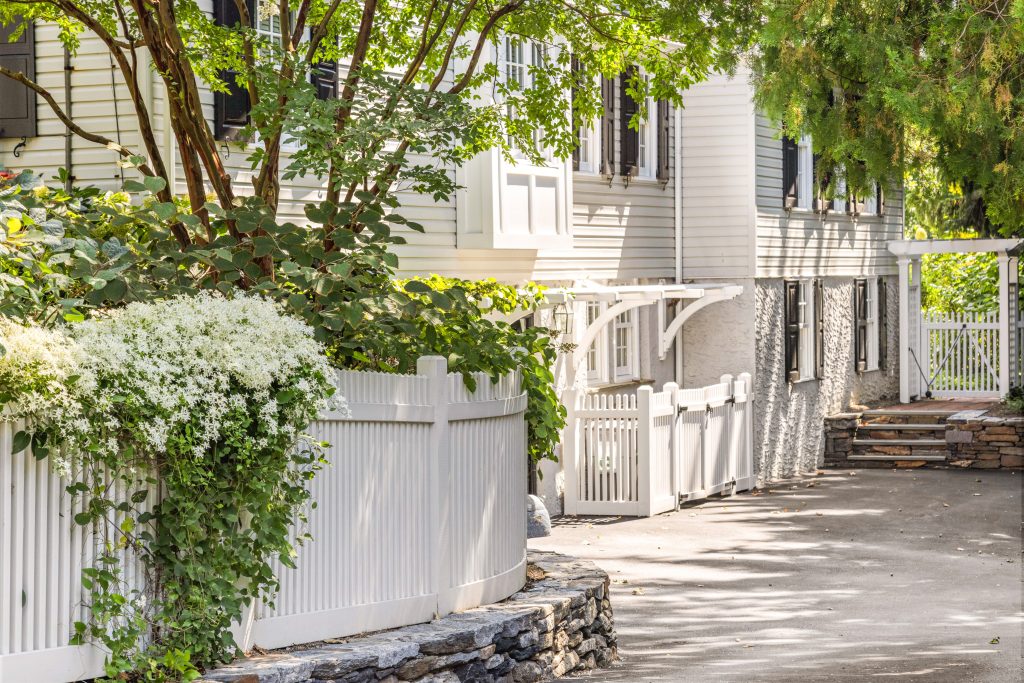
For homeowners on the Main Line and across Philadelphia’s established neighborhoods, springtime is when outdoor spaces get put to real use. From graduations to summer barbecues, from inviting a few neighbors over to hosting a family reunion, you want your outdoor spaces to provide the perfect backdrop for making memories. Painting a fence could be the small simple touch that adds polish to the setting without calling attention to itself.

Not every fence needs to be painted. But if you have a structurally sound wooden fence with a weathered finish, a fresh coat will seal the wood against moisture, slow the damaging effects of UV rays, and protect against the mold and mildew that Philadelphia’s humid summers accelerate.
“Some fences look best unpainted. Some are constructed from materials that have a built-in finish that protects them from the elements and requires no additional paint,” says Dennis, one of the craftsmen at John Neill Painting. “It’s always good to keep in mind that anything you paint will eventually have to be repainted. So if the fence doesn’t need it, there’s no reason to start that cycle.”
Vinyl fencing, for example, can be painted but generally doesn’t need it. Modern extruded metal and most steel or aluminum fencing usually has a factory-applied protective finish. As long as that finish is intact, there is no need to paint. Wrought iron, on the other hand, requires paint to stay protected from the elements and requires specific materials to get the job done right.
Pressure-treated wood, both new and aged, is naturally beautiful and saturated with chemical preservatives. If you decide to paint it, wait several months so the excess preservatives can evaporate and the paint can bond properly.

In the Philadelphia area, late spring is the ideal window for painting a fence, with moderate humidity and enough dry days to allow proper curing before summer. Spring is the busiest season for exterior work, so the earlier you book your service, the more flexibility you’ll have in scheduling.
Avoid starting a fence project when:
The right product for painting a fence depends on the material.
Use an exterior-grade acrylic latex or a quality solid stain with a high-grade bonding primer on bare or heavily weathered sections. If the finish coat will be a color other than white, have the primer tinted to the closest matching shade.
You’ll need a primer formulated for non-porous surfaces. The color should not go significantly darker than the original, as vinyl absorbs heat, and darker shades can cause warping.
Iron must be primed with an oil-based rust-preventative primer, followed by an acrylic or oil-based topcoat.
If the factory finish is worn, confirm the paint’s compatibility with the existing coating.
“There are so many different types of fencing that it would be impossible to prescribe an exact method of application without seeing the fence in question,” says the team at John Neill Painting. “If you’re planning on painting a fence yourself, take a photo of the fence to the paint store and talk to an experienced associate. Let them guide you on the materials and tools needed to do the job properly.”

The best tool depends on the fence type, its scale, and the equipment available.
“Solid wall fencing is easiest to paint with a conventional roller and brush, and slats and posts are the second easiest with simple tools,” says the painting pros. “Chain link and wire fences can also be painted with a brush and roller. Spraying is best left to a professional painter. A high-quality airless sprayer is usually best suited for this type of job, especially if the fence is long, high, or both.”
The professional approach to painting a fence depends on the proximity to the house and style of fence. One option is to spray for even coverage, and then roll it back into the surface to drive it into the grain and ensure proper adhesion. Spraying without back-rolling can result in peeling later. A more common option for residential areas is to brush and roll for better control and to avoid any issues with overspray.
Proper preparation is also essential to ensure a long-lasting application. Thoroughly clean the fence of any dirt, mold, or mildew, and remove the existing paint. Let it dry completely for 24 to 48 hours, then fill cracks, sand rough areas, replace compromised sections, and begin priming. Follow with two coats of topcoat, allowing each to fully dry between applications.
The best outdoor spaces are those where everything feels considered, and the details work together, with nothing pulling attention away from the people and the moment. A freshly painted fence makes the whole yard feel a little more polished.
John Neill Painting’s craftsmen work on fences, exteriors, and outdoor spaces across the Main Line and the greater Philadelphia area every spring and summer. Check out our portfolio to see examples of our work. We guarantee thorough preparation, the right materials for the conditions, and execution that holds up long after the party’s over.
If your fence is on the list for a refresh this spring, we’re scheduling exterior painting projects now – request an estimate or call us at (610) 664-5555.
Yes, when the fence is structurally sound and the existing finish has worn past the point of protecting the surface. But not every fence needs paint: vinyl, pressure-treated wood, and many metal fences come with built-in protection that makes painting unnecessary unless the original finish has failed. The condition of the fence and its material determine whether painting makes sense or whether you’re starting an unnecessary maintenance cycle.
You can, if the existing finish is clean, dry, and firmly adhered. If the paint is peeling, blistering, or chalking heavily, it needs to be removed or treated first. Painting over a failing finish causes the new coat to fail just as quickly.
It depends on the material. Wood fences do best with exterior-grade acrylic latex or a solid stain. Vinyl requires a primer specifically formulated for non-porous surfaces. Wrought iron needs an oil-based rust-preventative primer before any topcoat. When in doubt, take a photo of the fence to a reputable paint store and ask for guidance on the right products for your specific surface.
For most homeowners, rolling and brushing is the most practical and controlled approach. Professional spray equipment is faster and better suited for long or tall fence runs, but it’s most effective in experienced hands. When spraying, the professional standard is to back-roll immediately after, driving paint into the surface for proper adhesion.
Avoid painting when rain is forecast within 36–48 hours, when temperatures are below 50°F or above 90°F, when the fence is still wet from recent washing, or when there’s visible rot or structural damage. Also hold off if you’ve recently installed pressure-treated wood; wait several months for the preservative to evaporate before applying any coating.
No. The fence should be cleaned before painting but must be completely dry before any primer or paint is applied. Painting over a damp surface traps moisture beneath the finish, leading to blistering and premature peeling.
Yes, but vinyl generally doesn’t require painting because it’s designed to hold its finish without it. If you do choose to paint vinyl, use a primer formulated for non-porous surfaces, and don’t go significantly darker than the original color. Darker vinyl absorbs more heat, which can cause warping. Keep in mind that once you paint vinyl, you’re committing to repainting it down the road.

info@johnneillpainting.com (610) 664-5555
231 Linwood Ave. Ardmore PA 19003
PA Contractor No. - PA014716
Licensed in PA, NJ & DE


Meticulous Preparation, Skilled Craftsmanship and a Commitment to Excellence
 |
We serve the following areas: Center City Philadelphia, Bala Cynwyd, Gladwyne, Narberth, Penn Valley, Merion, Wynnewood, Ardmore, Haverford, Bryn Mawr, Villanova, Wayne, Devon, Berwyn, Paoli, Malvern, Chester Springs, Newtown Square, West Chester, Blue Bell, Gwynedd, Jenkintown, Rydal, Meadowbrook, and Chestnut Hill.
© 2026 John Neill Painting & Decorating. All rights reserved. Privacy Policy.
